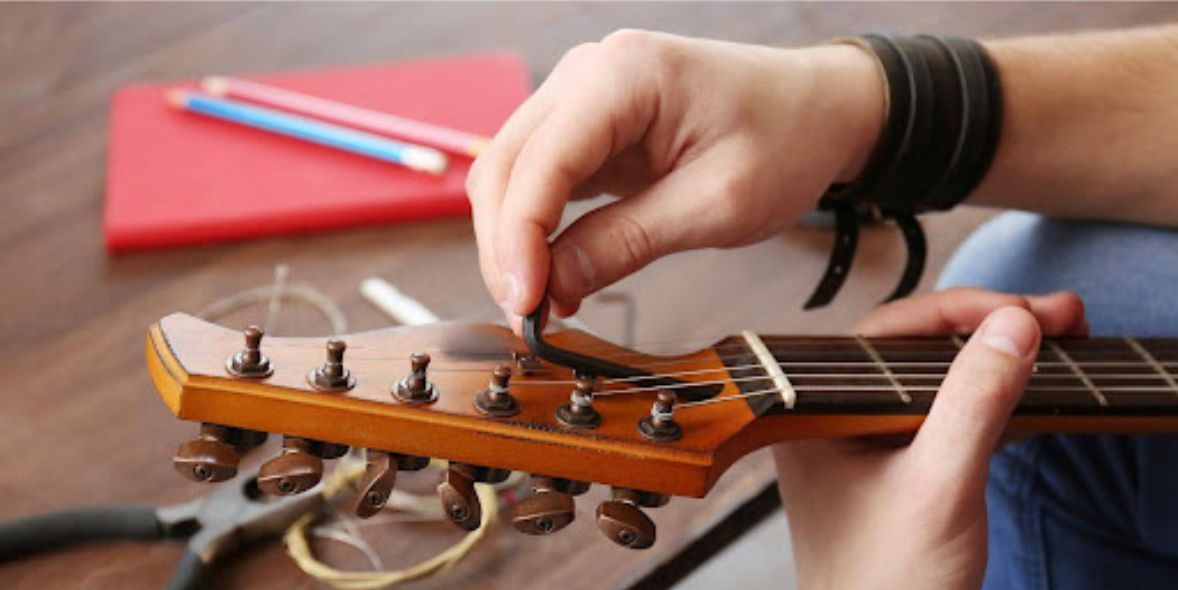
If you love music, enjoy working with your hands, and want a simple way to earn extra income, repairing guitars is one of the best paths to take. With millions of players worldwide, guitars are always in need of care. Players want their instruments to feel great, sound clear, and stay reliable. That means there’s steady demand for basic repair and setup work, exactly the kind of jobs a beginner can learn quickly and turn into a trusted service.
This Guide to Guitar Repairs for Beginners gives you a safe, practical starting point. You’ll see how to set up your space, which skills to practice first, and what services actually build trust with players. The goal is to help you avoid rookie mistakes and move step by step into real repair work that keeps customers coming back.
Why this Guide Matters
Most of the demand for guitar repair comes down to just a handful of services. Setups are the bread and butter, followed by fret dressing, electronics work, nut swaps, tuner installs, and smoothing sharp fret ends. Together, these jobs cover nearly everything guitar players ask for week after week.
Starting with these essentials keeps your learning focused, your stress low, and your results repeatable. Players care most about how their guitar feels in their hands, how quickly they get it back, and how professional you are in the process. Deliver on those, and you’ve already built the foundation of a reputation.
Build a safe and simple workspace
You don’t need a full shop to get started. A sturdy bench or table with good lighting is enough. Add a neck rest, a soft mat, and a small tray for parts. Plan your steps before you touch the instrument. Tape off areas near risk spots, wear eye protection when clipping strings, and make sure your tools fit the hardware. These small habits prevent accidents and keep the work calm.
Strings and cleaning come first
String changes are the fastest upgrade for tone and feel, and they’re also safe for beginners. On electrics, follow clean winding practices and stretch strings in stages. On acoustics, swap two strings at a time so the top stays stable. Always clean as you go, wipe sweat, remove grime, and polish carefully without letting moisture near electronics. Customers notice the difference immediately.
Learn the setup basics
Every guitar benefits from the right neck relief, action, and intonation. Start by checking relief, then move to saddle height, and finish with intonation. Record measurements on a bench card so you can repeat results between visits. Take calm, measured steps, tune often, move hardware in small increments, and check each adjustment carefully. Consistency here is what makes beginners look professional.
Add approachable services
Once you’re comfortable with strings, cleaning, and setups, expand into the other high-demand services:
- Nut swaps for better tone and tuning stability
- Tuner installs when players want upgrades or replacements
- Electronics and soldering for common jack or switch fixes
- Fret dressing to smooth uneven frets
- Sharp fret end work for comfort
These are the six services that make up most of the real-world income for repair techs. Practice them on your own guitars first, then offer them as paid services with confidence.
Practice the right way
Skill grows fastest with a repeatable loop. Pick one job, follow a trusted process, do it on your guitar, measure before and after, and repeat several times. Only then move on to the next skill. This focused practice curve keeps you improving without the stress of random trial and error.
Turning Repairs into A Business
The right path is simple. Start small, build trust, and grow one service at a time. Focus on the core six jobs that players actually ask for. Keep your work clean and your process repeatable. Collect reviews, and let word of mouth grow your name.
This guide to guitar repairs for beginners is just the starting point. If you want to go further, Guitar Repair Business Starter gives you coaching, a proven system to attract players, and the community support to build a steady side income, or even a full-time shop.
The important thing is to start. The sooner you take on safe beginner jobs, the sooner you’ll build confidence, skill, and a reputation that keeps guitars coming back through your door.